Two exams, two skills
Board exams test recall. NEET tests recognition. We prepare for both.
A board exam asks your child to write what they know, step by step. NEET asks them to recognise the right idea inside an unfamiliar question and choose, fast, with only the final answer counting. They are different skills, and we train both deliberately.
For the Board exam
Careful writing, repeated revision
Board-pattern written tests, answer-writing practice, laboratory practicals and two full preparatory examinations before the real one.
For NEET
Joined-up understanding
Learning in layers, notes in the student’s own words, revision every evening, full-length tests, and a careful analysis after every one.
Together
Two hours a subject, every day
Physics, Chemistry and Biology each get an hour of learning from NCERT and an hour of analysis with the teacher, every day. Mathematics has its own hour for PUC students.
Learning in layers
First the map. Then the overview. Then the depth.
Understanding grows in layers, so that is how we teach. Students begin by building a map of the whole syllabus — a personal index of everything there is to know, drawn from NCERT. Then they acquire a working knowledge of every topic on that map. Only then do they go deep, chapter by chapter, from every angle.
This is slower at the start and much faster in the end. A student who holds the whole map in their head is never lost in a question, because they always know where it belongs.
After every test
The test is where the learning begins.
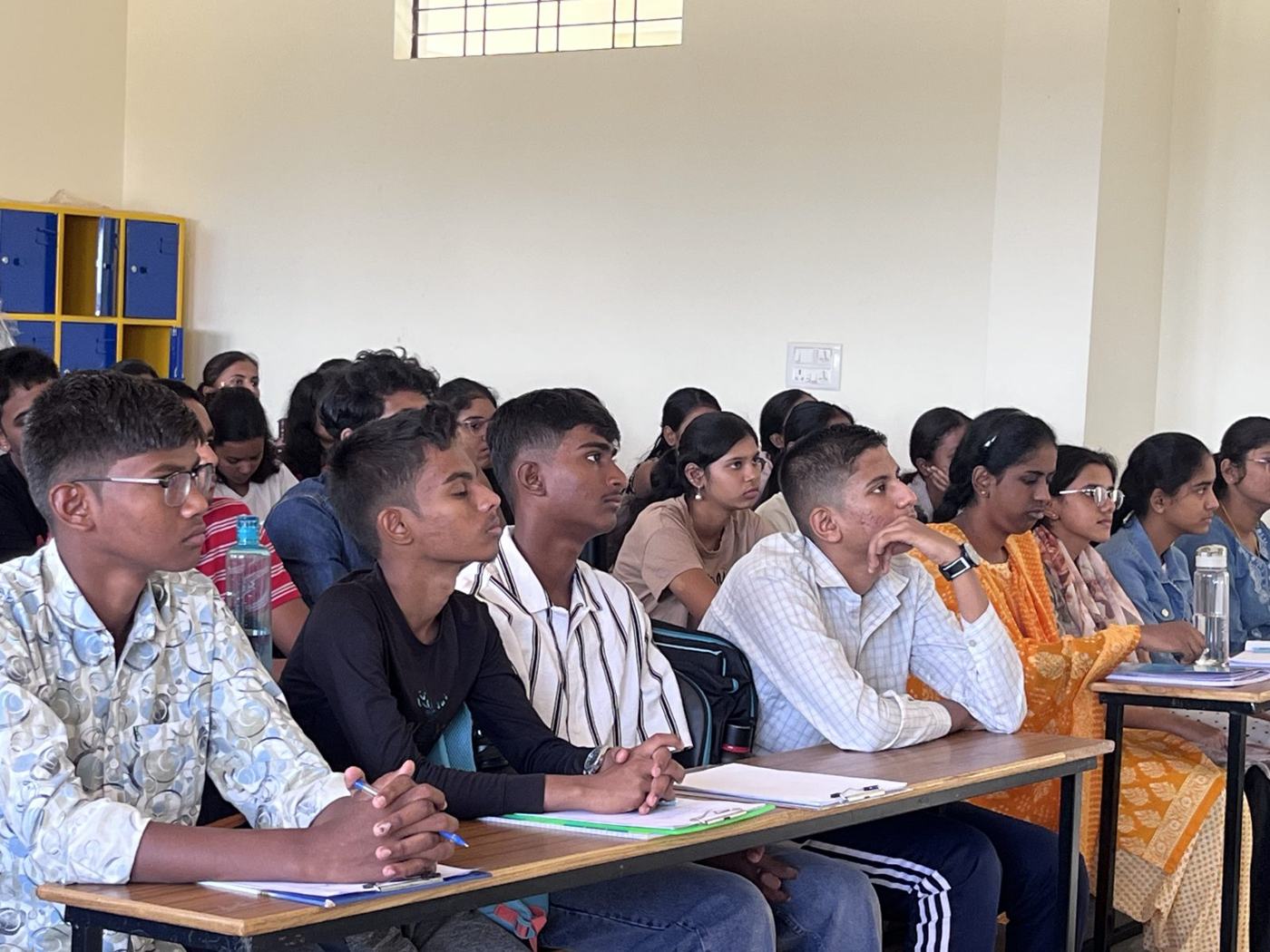
The morning after every mock test, each student works through the paper with the teacher. For every question that went wrong — or went right for the wrong reason — we ask five questions.
Which concept?
What idea was this question really testing, and where does it sit on the student’s map of the syllabus?
What reasoning?
What chain of thinking leads from the question to the answer — and exactly where did the student’s chain break?
What method?
What is the quickest correct route to the answer within the time NEET allows?
What changes in the notes?
What must the student add or correct in their own notes so this mistake cannot happen twice?
And finally: can the student explain the idea in everyday words, simply enough for a younger student to understand? When they can, we know it is theirs.
Revision and testing
Revision every evening. Real tests, every time.
Three hours of revision are on the timetable every evening — two hours from the student’s own notes after games, and a focused hour after dinner. Revision is never homework left to chance. It is how every day ends.
Every mock NEET we set is the full syllabus, the full paper and the full three hours, sat in the afternoon at the real exam hour. We never shorten a test and call it a mock, because a shortened test teaches a student the wrong things about the real one.
Take the next step
See a class for yourself.
Come on a Sunday and watch a test analysis. It is the fastest way to understand why our students improve.